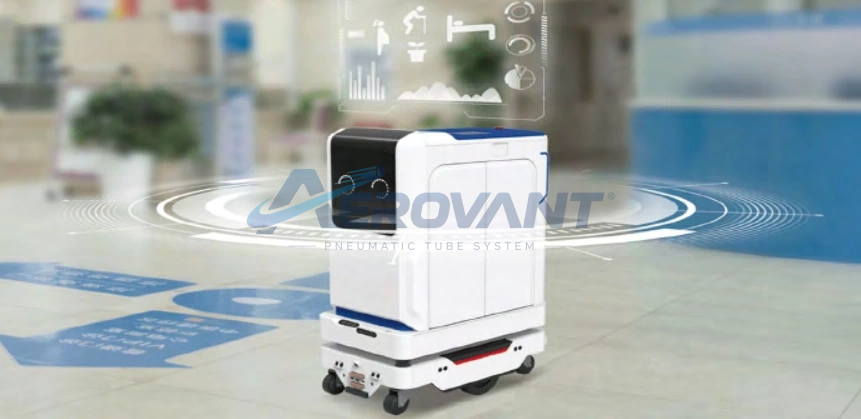

 ID
Automatic transport and sorting
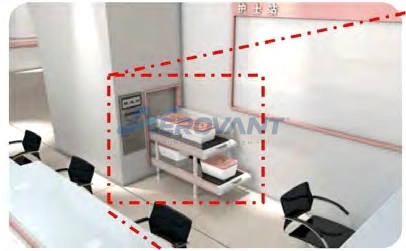
Sending stations connect to horizontal and vertical transport networks and sorting modules according to the design.
Automated box delivery and sorting.
The box transport system combines sending, conveying, and sorting equipment with information systems. Materials are placed in circulation boxes, then moved horizontally and vertically to their destination stations.
Solution overview
Automation replaces some manual material handling and sorting tasks. Hardware and software work together to support accurate distribution, real-time monitoring, and logistics information sharing.
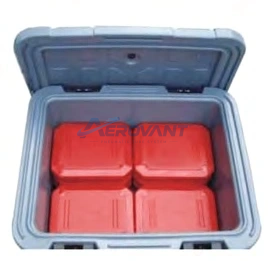
The catalogue distinguishes immediate deliveries of medicines or specimens from planned transport of larger materials such as patient meals and linen. Boxes, inserts, routes, and handling methods are selected for the material's characteristics.
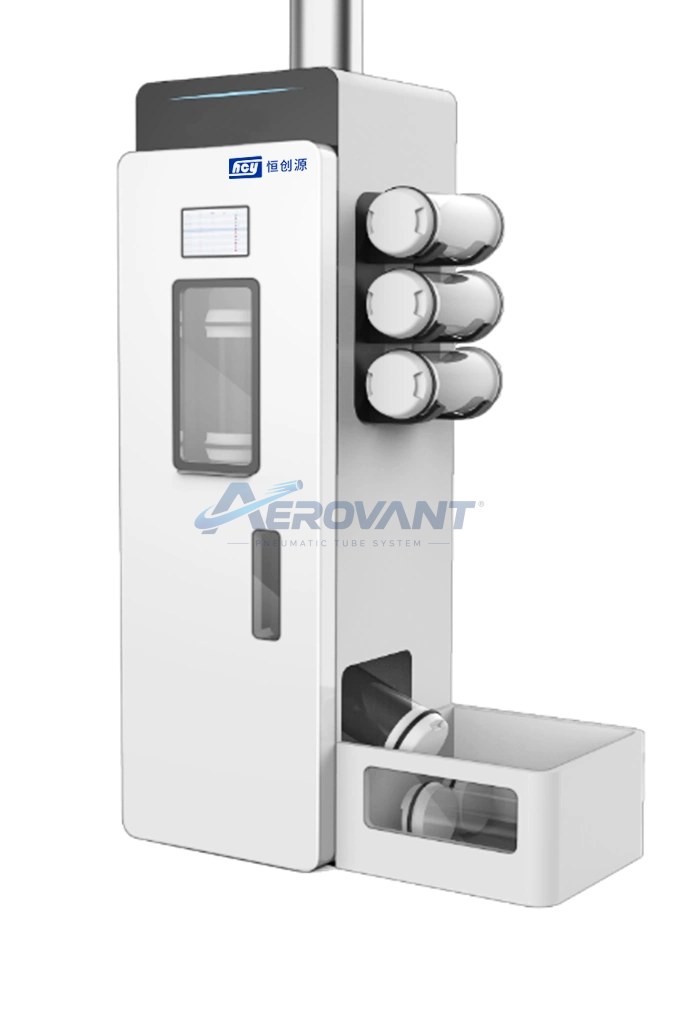
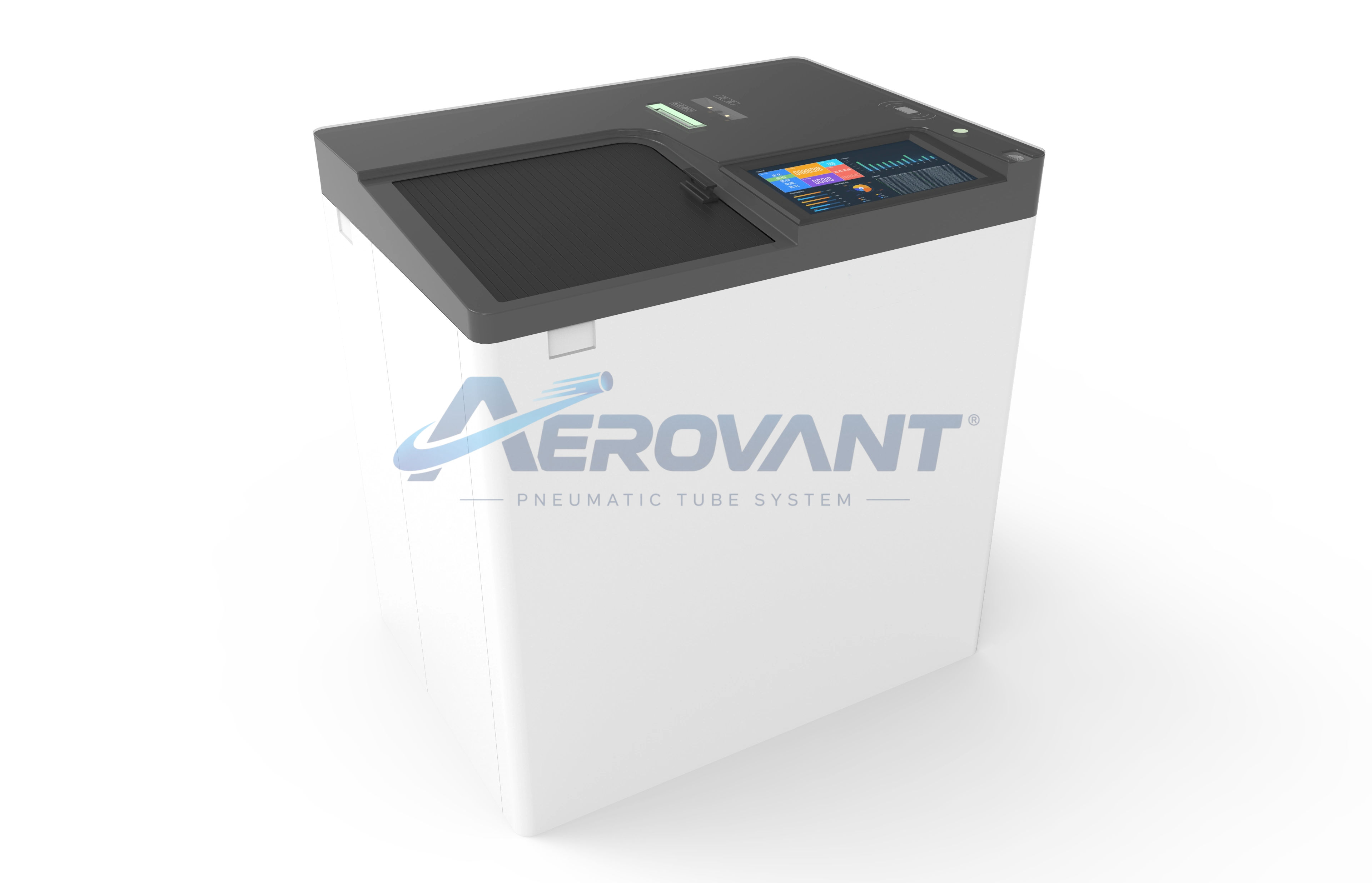
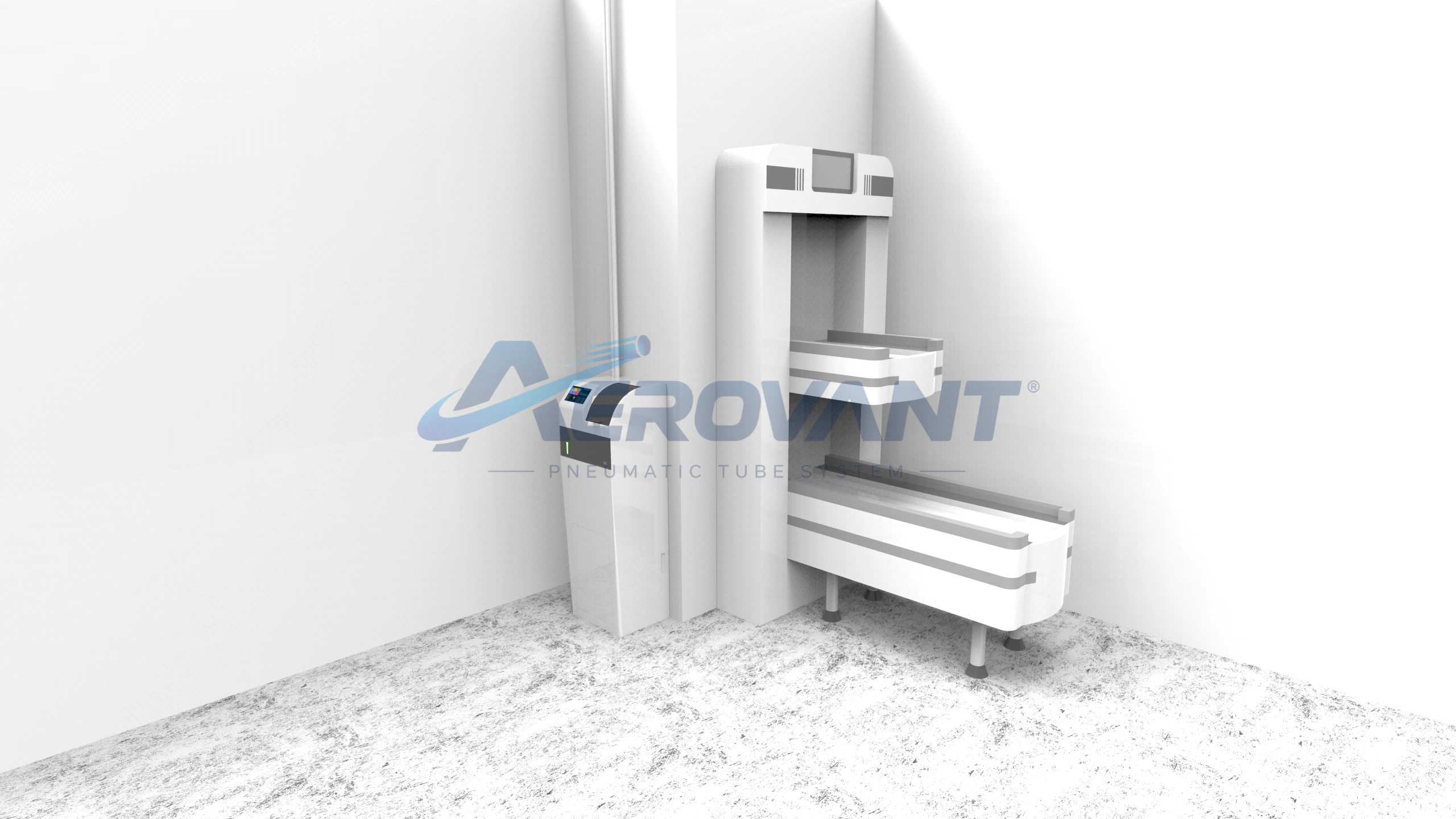
Enlarge ↗Example terminal for a box transport and sorting system.
Features & benefits
Sending stations connect to horizontal and vertical transport networks and sorting modules according to the design.
Logistics information and traceability systems help users track material flow and manage distribution.
The catalogue shows applications for specimens, blood products, surgical instruments, medicines, beverages, infusion fluids, documents, pathology slides, office supplies, clothing, and linen.
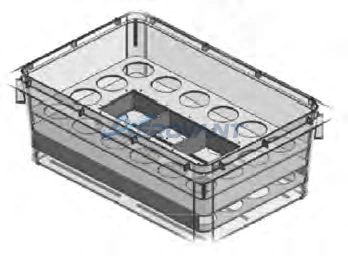
Inserts can be tailored for fragile items or materials that must remain upright, including test samples. Protective fittings are selected for the load type.
Management goals described in the catalogue include timely, accurate delivery, reduced transport work for staff, and operating cost management.
How it works
Select a suitable box and protective insert, then load the materials according to facility procedures.
Use the station and identification devices according to the barcode or RFID management configuration.
Horizontal transport, vertical transport, and sorting equipment route boxes to their assigned destinations.
Boxes arrive at the destination workstation. Delivery information is managed through software and traceability systems.
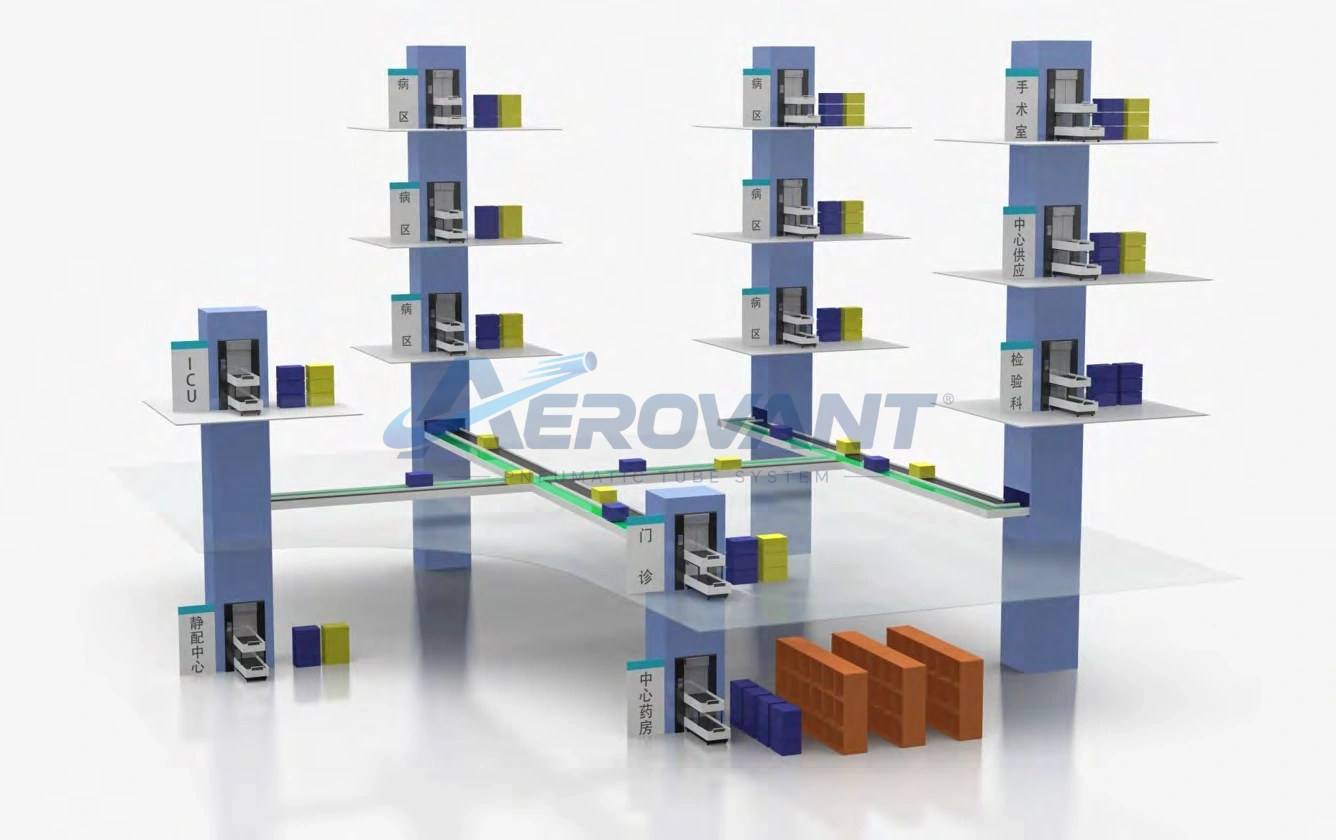 Enlarge ↗
Illustration of stations and box transport routes between floors.
System components
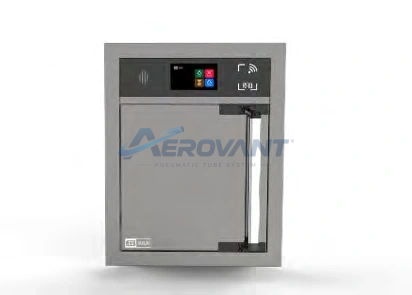
Points for loading boxes into and receiving them from the logistics network. Station design and interfaces follow the layout and department requirements.
Includes horizontal transport, vertical transport, and sorting systems connecting service points.
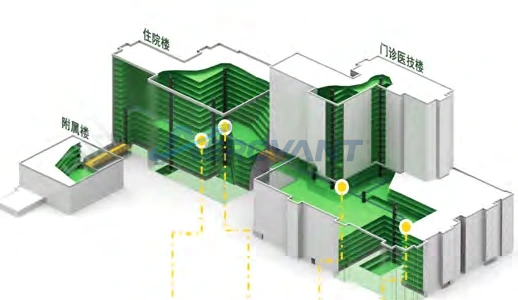 Enlarge ↗
Illustration of transport routes within a building complex.
 Enlarge ↗
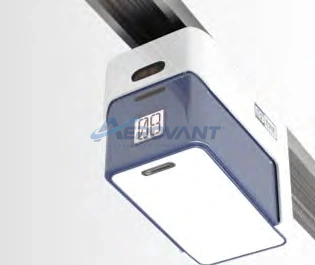
Equipment detail from the box transport network illustration.
 Enlarge ↗
Equipment detail from the box transport network illustration.
 Enlarge ↗
Equipment detail from the box transport network illustration.
 Enlarge ↗
Equipment detail from the box transport network illustration.
The catalogue groups transport management software, traceability systems, and barcode/RFID management as software components. Handheld terminals and auxiliary devices are included in the system configuration.
Information system
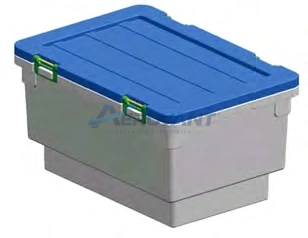
Standard large and small boxes are listed, with a stated maximum load of 50 kg. Special inserts can be prepared for fragile materials and items that must remain upright.
Specifications & configuration
The following technical parameters provide an initial guide. Final configuration depends on facility requirements and site conditions.
| Parameter | Details |
|---|---|
| Large standard box (L × W × H) | 660 × 450 × 350 mm |
| Small standard box (L × W × H) | 470 × 320 × 240 mm |
| Stated maximum capacity | 50 kg; confirmation is required for the selected box and route configuration |
| Network | Horizontal transport, vertical transport, and sorting |
| Supporting hardware | Workstations, specialised boxes, handheld terminals, and auxiliary devices |
| Software | Transport management, traceability, barcode/RFID |
| Customisation | Box inserts for fragile items or loads that must remain upright |
The material list reflects the application scope in the catalogue. Suitability depends on packaging, temperature control where needed, route separation, and the selected configuration.
Applications
Application areas can be selected to suit the facility's internal transport requirements.
 Enlarge ↗
A material category shown in the system's application scope. Handling follows the characteristics and procedures for each material.
 Enlarge ↗
A material category shown in the system's application scope. Handling follows the characteristics and procedures for each material.
 Enlarge ↗
A material category shown in the system's application scope. Handling follows the characteristics and procedures for each material.
 Enlarge ↗
A material category shown in the system's application scope. Handling follows the characteristics and procedures for each material.
 Enlarge ↗
A material category shown in the system's application scope. Handling follows the characteristics and procedures for each material.
 Enlarge ↗
A material category shown in the system's application scope. Handling follows the characteristics and procedures for each material.
 Enlarge ↗
A material category shown in the system's application scope. Handling follows the characteristics and procedures for each material.
 Enlarge ↗
A material category shown in the system's application scope. Handling follows the characteristics and procedures for each material.
 Enlarge ↗
A material category shown in the system's application scope. Handling follows the characteristics and procedures for each material.
 Enlarge ↗
A material category shown in the system's application scope. Handling follows the characteristics and procedures for each material.
Product photographs and diagrams are based on the manufacturer's technical materials.
The Aerovant Ecosystem
Let's get connected
Start by identifying your facility's internal transport requirements.